
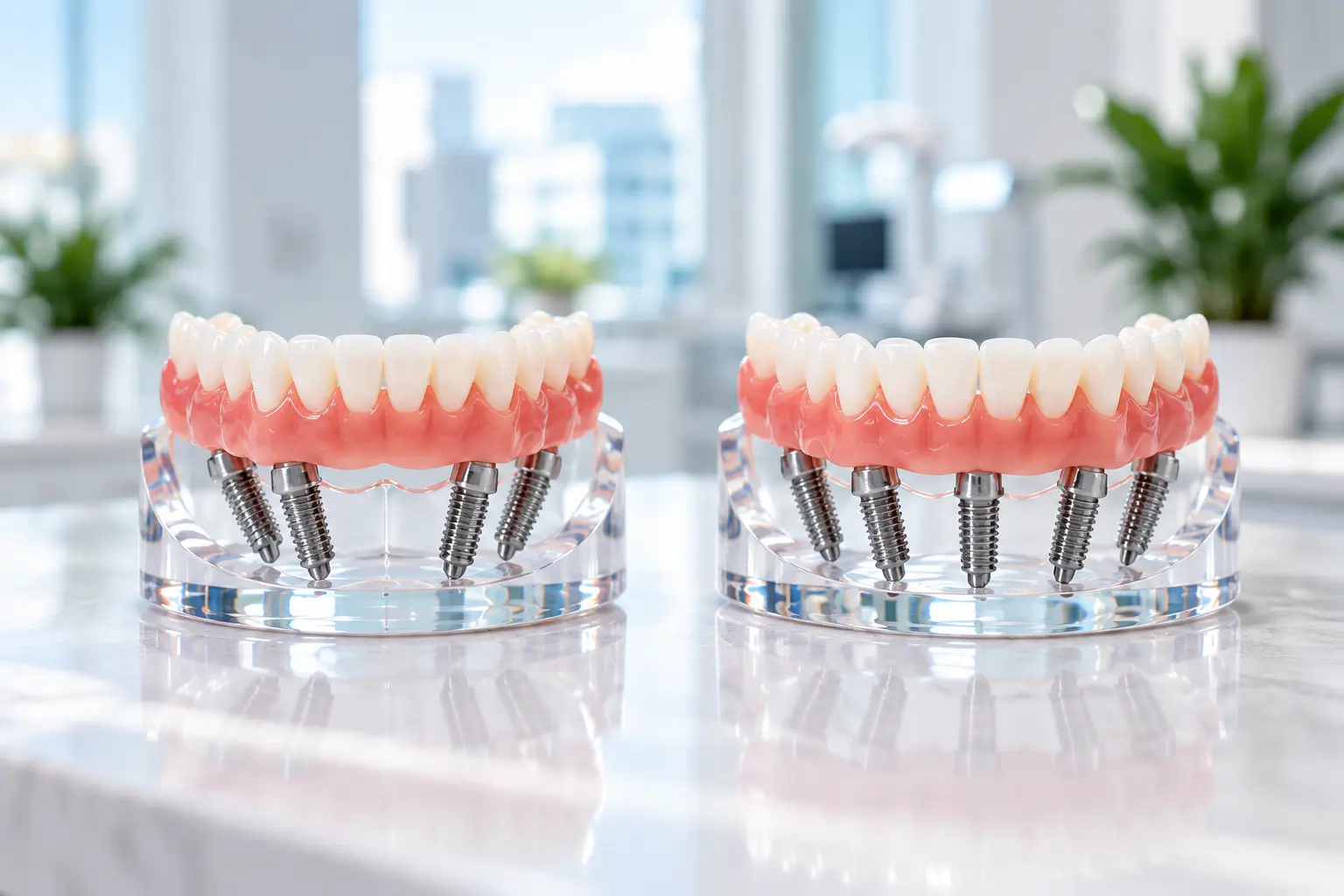
All-on-4 and All-on-6 are both fixed full-arch implant solutions. The obvious difference is the number of implants: four versus six per treated arch. But choosing between them is not a simple “more implants is always better” decision. Bone anatomy, implant distribution, bite forces, available space and long-term maintenance all matter.
All-on-4 vs All-on-6 at a glance
| Feature | All-on-4 | All-on-6 |
|---|---|---|
| Implants per arch | 4 | 6 |
| Main goal | Fixed full-arch support with four implants | Fixed full-arch support with six implants |
| Bone requirement | May use available bone efficiently | Requires suitable bone for two additional implant sites |
| Load distribution | Across four implants | Across six implants |
| Typical Dentares schedule | 2 visits | 2 visits |
When might All-on-4 be considered?
All-on-4 can be attractive when a patient needs a full fixed arch and four well-positioned implants can provide an appropriate foundation. Angled placement in many All-on-4 plans may help use available bone and, in selected cases, reduce the need for grafting.
When might All-on-6 be considered?
All-on-6 uses two additional implants. When bone conditions allow, the extra support can provide wider implant distribution across the arch. This may be preferred in some cases with higher bite forces or where the clinician wants additional support points for the final bridge.
Is All-on-6 more expensive?
It can be, because two additional implants and components are used. Using the broad planning range supplied for Turkey, full-arch All-on-4 / All-on-6 treatments are often seen around $3,000–$7,000 (£2,000–£5,500) per arch. The actual difference depends on implant system, extractions, grafting, temporary teeth, final bridge and package contents.
Do both treatments need two visits?
At Dentares, both are commonly planned over two visits. The first focuses on surgery and temporary restoration when possible. After a healing period of roughly three to six months, the second visit is used for the final zirconia restoration.
Which one is better?
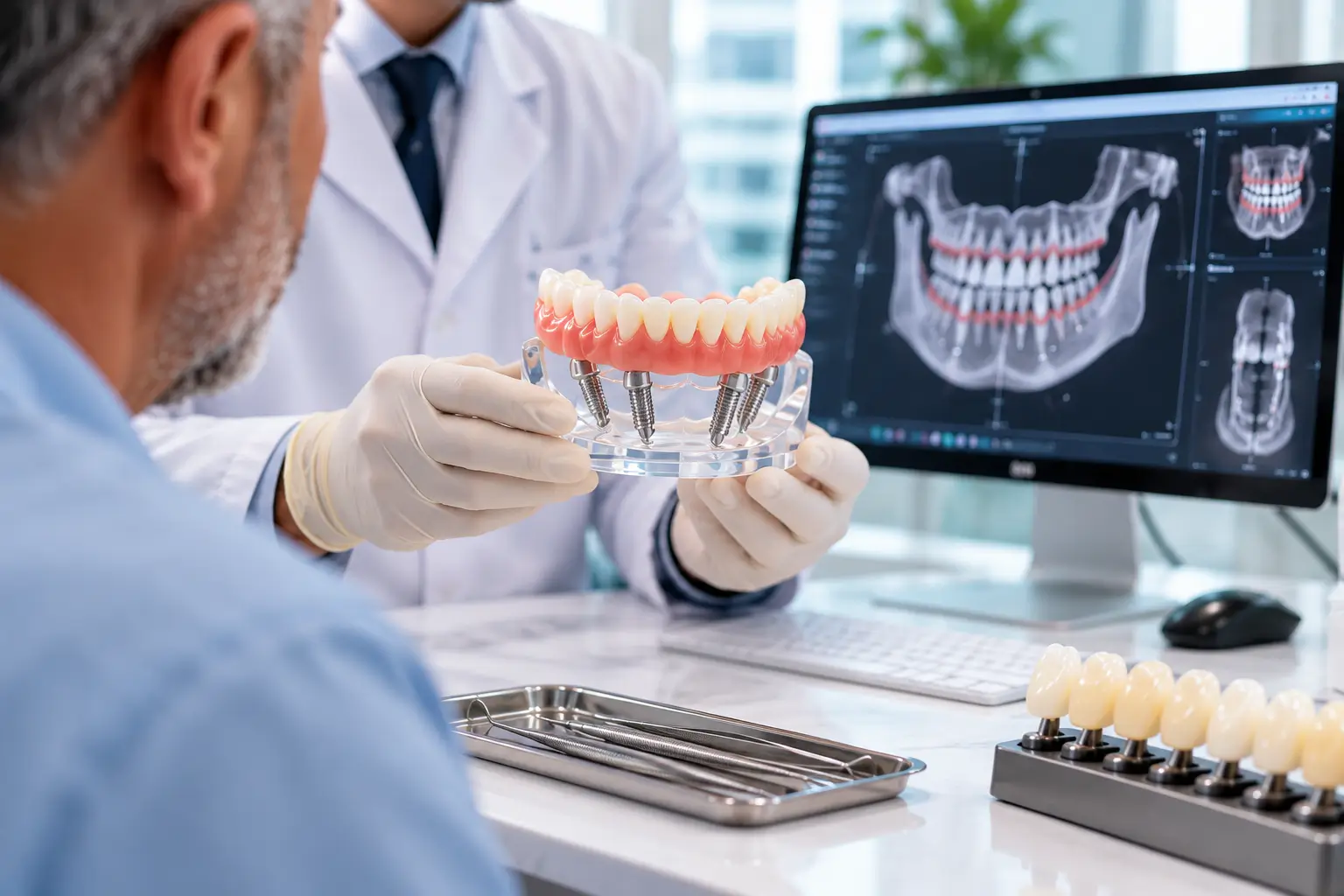
The better option is the one that is safer and more predictable for your anatomy and bite. A good decision is based on CBCT imaging, the amount and quality of bone, implant positions, medical history and the design of the final teeth.
Send your case for an initial assessment. Book a free online consultation with Dentares Smile Clinic before travelling to Antalya.
Frequently asked questions
Does All-on-6 always last longer than All-on-4?
Not necessarily. Long-term success depends on planning, implant integration, hygiene, bite control, smoking and maintenance as well as implant number.
Can I choose All-on-6 just because I want more implants?
Your preference can be discussed, but the final recommendation should be based on bone anatomy and the restorative plan.
Can both options have temporary teeth?
Temporary fixed teeth may be possible in suitable cases when implant stability and tissue conditions are adequate.